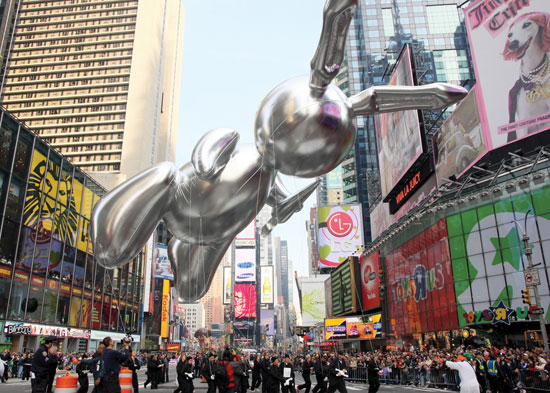
The January issue of e-flux journal is the first half of a two-parter, guest-edited by Tom Holert, on “The Politics of Shine.” My essay “Shine and Schein” can be found here.
The January issue of e-flux journal is the first half of a two-parter, guest-edited by Tom Holert, on “The Politics of Shine.” My essay “Shine and Schein” can be found here.

While the aftermath of the Charlie Hebdo massacre was unfolding in the media in real time, I came across this drawing (depicting an editorial meeting on a Wednesday, no less) from a 1967 comic by Goscinny and Gotlib. Cabu being late (en retard) with his drawings was evidently a running gag that lasted for half a century, and to which fellow cartoonist Zep has now given a final twist:

Meanwhile, this made-for-social-media bloodbath clearly has the desired effect of strengthening the proponents of ideological Kulturkampf on all sides, and making any genuine social and political analysis and action extremely difficult. Olivier Roy has a good, level-headed take on the situation in Le Monde, but the online version is behind a paywall. In the New Statesman, Žižek displays his knack for dialectical acrobatics in thinking beyond the ideological opposition between Liberal West versus Fundamentalist Islam.
Open! has published my essay “Concrete Abstraction – Our Common World,” which is roughly and partly based on a talk I gave at the Art in the Age Age of Real Abstraction symposium at UCL in the spring of 2014. After “Living with Abstraction” and “Inside Abstraction” this is my third essay on the subject, and I promise it’s the last one. (With the proviso that at some point, this text and bits of “Inside Abstraction” should become a book chapter.)
In the context of Open!, the essay is part of the “Commonist Aesthetics” series.
The December issue of Texte zur Kunst contains my review of Johanna Burton and Ellegood’s exhibition catalogue, Take It or Leave It, which reexamines genealogies of institutional critique and appropriation art. My text is supposed to be titled “Expanding Concepts and Fields,” which admittedly isn’t terribly catchy, but has a clear connection with the content of the piece. When I received the issue, it became apparent that this had been changed into the horribly generic “Event Horizon,” – the very same title that Artforum had bestowed upon my review of Gerald Raunig’s Art and Revolution back in 2007. That text was originally titled “Retro Revolution.” Great minds think alike – and so, it would seem, do editors.
Okay, I’ve vented my spleen. The actual text is, I think, quite substantial and worth checking out, and it has benefited greatly from the Texte zur Kunst editors’ editorial care.
For the December issue of Metropolis M, the editor has asked Marina Vishmidt, Tom Vandeputte and myself to say a few words on the state of art theory in Holland (in Dutch).
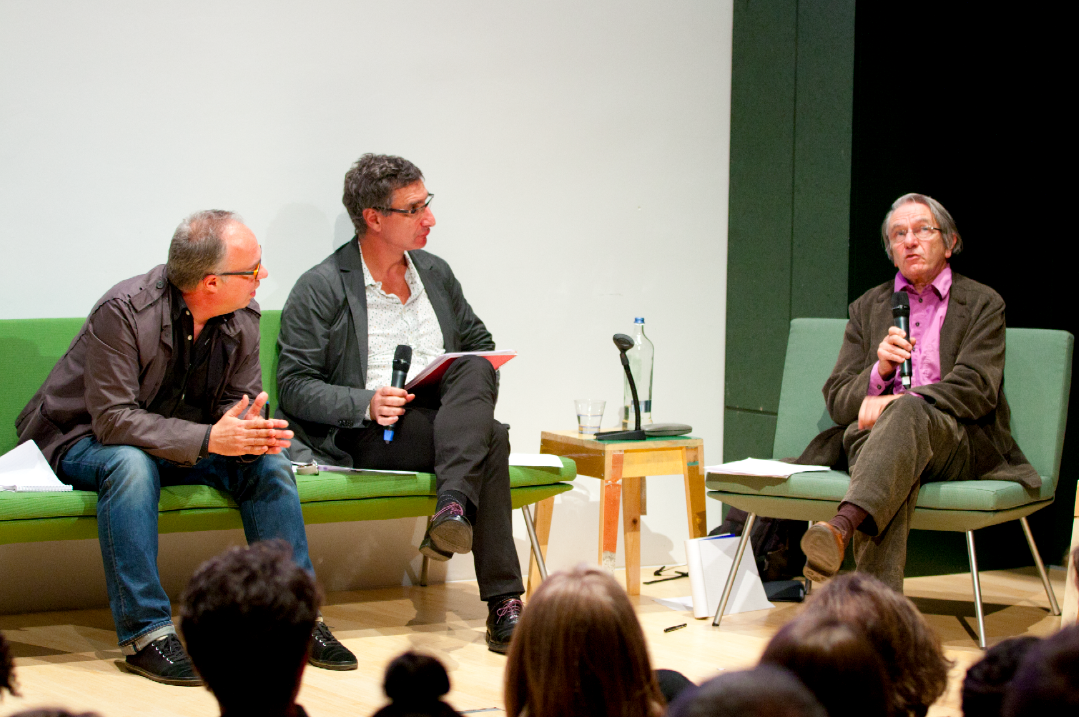
The December 2014 issue of Theory, Culture & Society contains a section on Jacques Rancière edited by Nikos Papastergiadis. Nikos was involved in the organizing of the Autonomy Symposium at the Van Abbemuseum in 2011, and like 2012’s autonomy issue of Open, which I guest-edited, this TCS special is an outcome of the symposium. My essay, “Autonomy as Aesthetic Practice,” is a further development of my essay in the Open issue and related to the subsequent book chapter (“Autonomy in Action”) in History in Motion (2013). Originally I assumed that Nikos’s Rancière issue would see the light of day before my book, but the glacial pace of peer-reviewed academic publishing has decreed otherwise. The advantage of this is that it has allowed me some further tweaking. It’s fair to say that the Open issue had its share of small editorial slip-ups, due to pressing temporal constraints – though I wouldn’t have wanted to wait till 2014, quite apart from the fact that at the moment Open (now Open!) is an online platform. (The possibility of paper anthologies for certain thematic strands is however being examined.)
Meanwhile, the Art and Autonomy reader on which I’m working for Afterall is also inching forward in a snail-like manner, mostly due to the many pressures on both parties (Afterall and myself). It should see the light of day sometime in 2015.
Image: Charles Esche, Nikos Papastergiadis and Jacques Rancière at the Autonomy Symposium. Photo by Emilio Moreno.
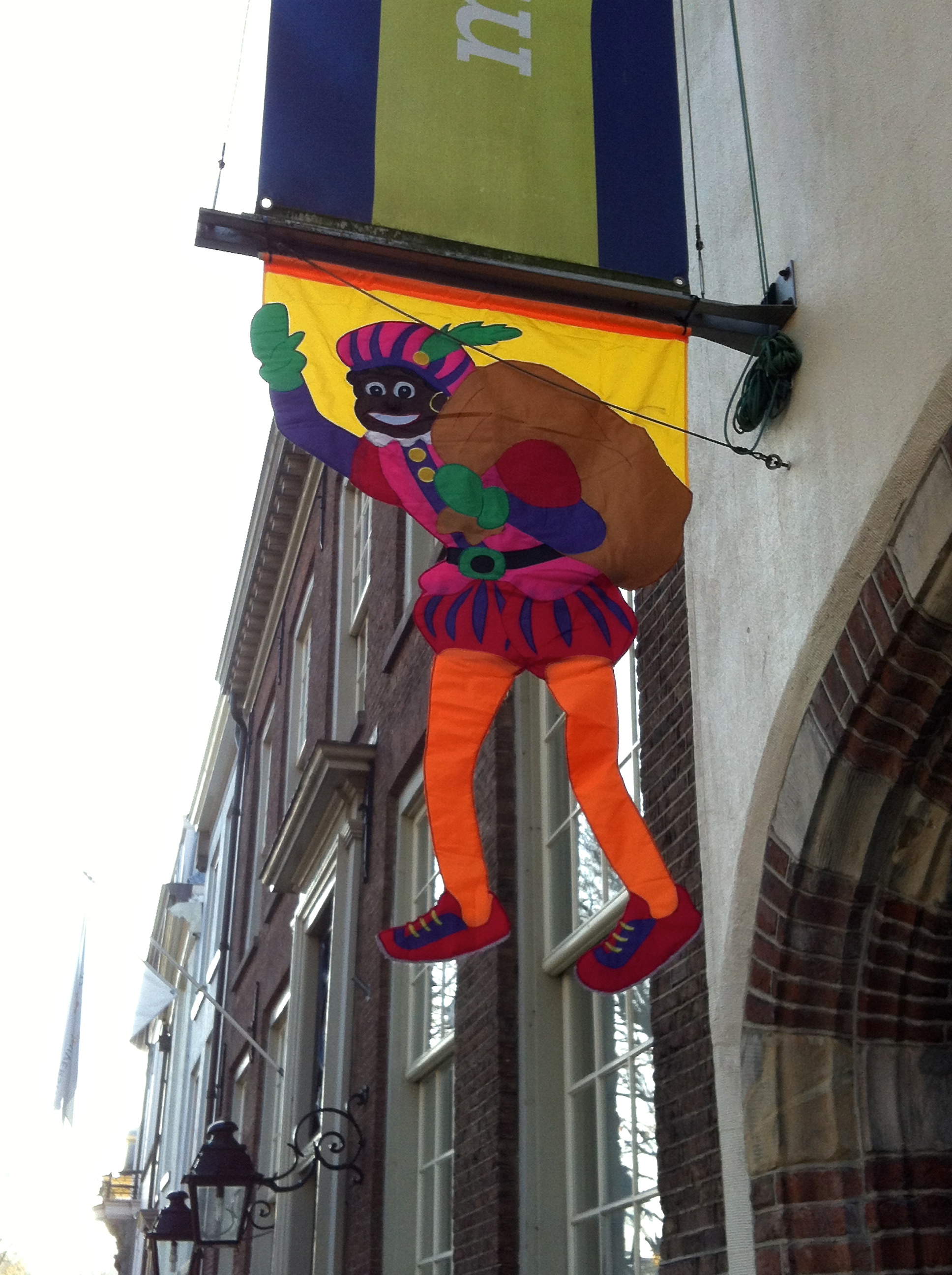
It’s that time of year again… There’s no escaping Zwarte Piet. Last year I wrote an essay on the “Black Pete” phenomenon and the Dutch postcolonial condition in Stedelijk Museum Bureau Amsterdam’s publication Project 1975. I have posted the text, “Piet Zwart & Zwarte Piet” (minus the illustrations) in the articles section of this site. Happy holidays, but watch out for that colonial hangover!
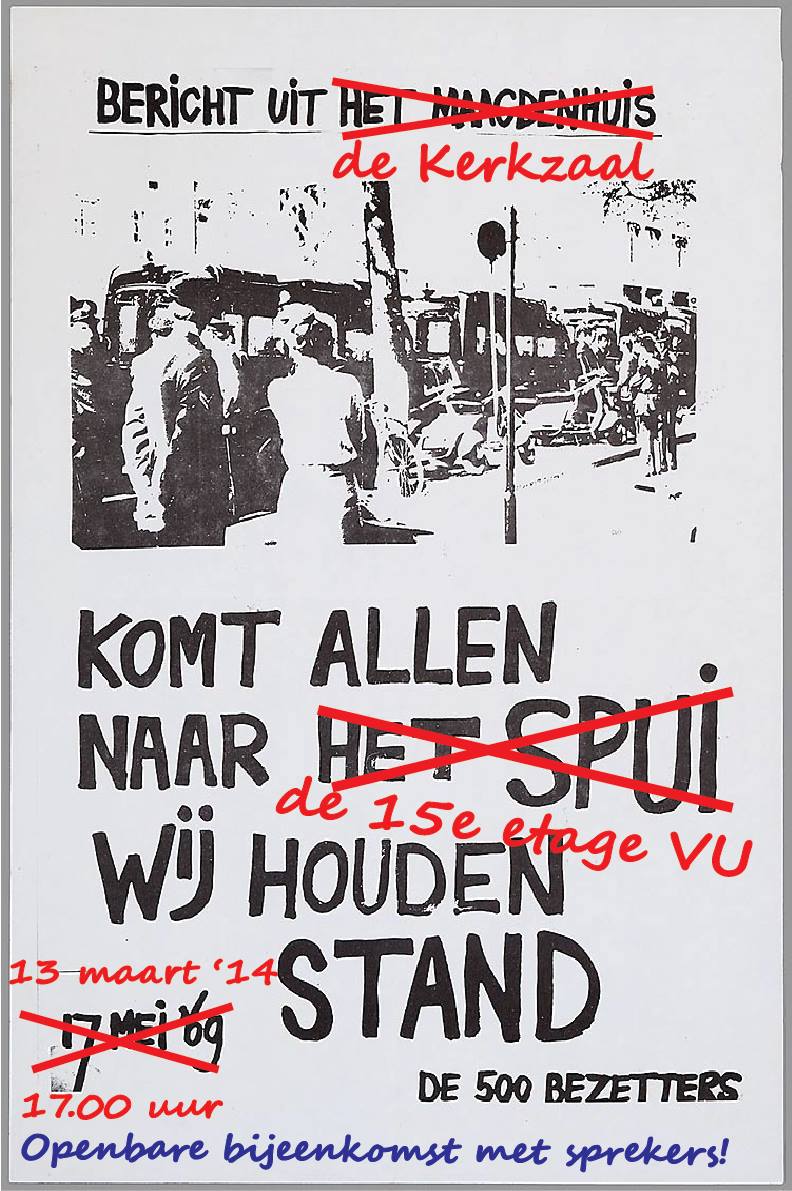
The new issue of the journal ARTMargins features a roundtable on “the critical archive,” in which I’m one of the participants. I’m erroneously identified as a lecturer in art history at the University of Amsterdam (or UvA). I teach at the other Amsterdam-based university, the Vrije Universiteit, a.k.a. VU University Amsterdam. My recent blogpost about the crisis at the UvA has apparently also created some confusion on this point. My post was made in solidarity with my UvA colleagues (and their students). The two universities collaborate on a number of levels, including joint MA programmes, and we are ultimately all in the same boat. Earlier this year, when the VU’s Faculty of Earth and Life Sciences faced similarly draconian cutbacks, students actually appropriated a flyer for the famous 1969 occupation of the UvA’s headquarters – the Maagdenhuis.
When the UvA’s humanities students announced their protests, the university’s newspaper Folia noted that their calls for resistance were “reminiscent of the 1960s.” If the VU students’ flyer ironically acknowledges that the potential for student protest and resistance has lain dormant for all too long, Folia‘s remark reads as a subtle putdown. Oh, those hipster students and their retro fads! It is of course true that the tables have been turned: if once the university was there to be taken, to be occupied, by progressive forces, today’s occupation actually starts in the boardroom and proceeds with through a dialectic of shock therapy (as in the current UvA situation) and the steady hollowing-out of rights and of forms of life through “baby steps” gradualism.
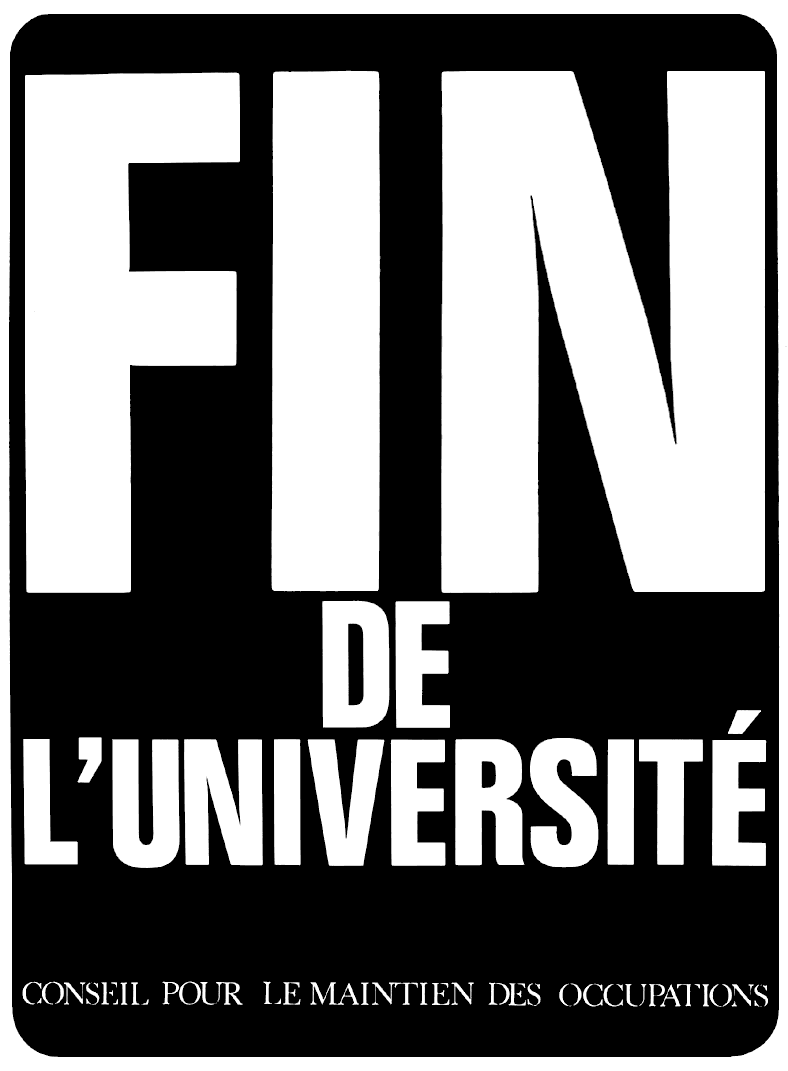
In 1968, the Situationist-dominated “Council for Maintaining the Occupations” at the Sorbonne put out a poster decreeing the “End of the University.” Now that universities have been occupied by rather different forces, a dystopian version of this utopian promise is a daily lived reality.

My colleagues at the humanities department of the University of Amsterdam (UvA) are facing a bloodshed: massive layoffs and the drastic reduction or closing down of entire programmes. Students and staff are united in protesting against the cutbacks, for the logic is as ever presented as an economic necessity without alternatives. For keeping up with the developments, there’s this facebook page is here: https://www.facebook.com/Humanitiesrally
Looking for media coverage, I couldn’t help but notice a striking and symptomatic pair of articles on the site of Het Parool, both published on 12 November: whereas one deals with the UvA protests, the other reports on a speech by Amsterdam’s alderwoman for culture, Kajsa Ollongren. Ollongren touts Amsterdam’s “cultural” potential, which is to says its potential for further economic growth through cultural tourism: “We have to create room for talents and the creative industry. I want the major museums to set the trend and become a magnet for talent. I’m hoping for a lot of new initiatives.” (My translation; the original doesn’t sound much better.) This is the “creative industries” ideology in a nutshell: produce meaningless rhetoric about “talent” while trying to bilk the rubes (pardon me, to attract tourists) with a limited and conservative palette of spectacularized “top culture,” and while striping down or even destroying institutions that actually preserve and generate cultural knowledge.
In the case of universities and other institutions, this destruction takes the form of a relentless financialization, with a highly paid managerial caste taking over and imposing the logic of financial derivatives on what used to be a public institution. An in-depth analysis of how this happened in the case of the UvA can be found here or here. While this takeover by finance capital is obviously far from limited to this country, Dutch academics so far seemed to be willing to put up with almost anything. It’s high time for those days (years, decades) to end.
Image: A still from Bregtje van der Haak’s terrific documentary Digital Amnesia showing the packing of books from the Royal Tropical Institute; this unique library was closed down and the collection was eventually shipped to Egypt, where the new Library of Alexandria was happy to receive it.

From November 27 to December 3, If I Can’t Dance will be hosting the Performance Days festival in Amsterdam. This occasion will also see the launch of four new books that have resulted from “Performance in Residence” research projects by Gregg Bordowitz, Jacob Korczynski, Grant Watson and myself. My publication, Louise Lawler’s “A Movie Will Be Shown Without the Picture,” was edited together with Tanja Boudoin and contains an introduction by Frédérique Bergholtz and Tanja, short texts by Eve Dullaart, Debbie Broekers and Daniël van de Poel, as well as my own extensive article—not to mention plentiful visual documentation of Lawler’s A Movie project plus related pieces, thanks to archival excavations by Louise and by Kenneth Pietrobono.
I’ve said this before, but I’ll say it again at a moment when the crisis of the Dutch universities’ humanities departments is rapidly deepening, and any form of meaningful activity may soon be made impossible by our Stalineoliberal overlords: it is heartening to see that small art organizations, however precarious their own position may be, invest in research and in critical practice.
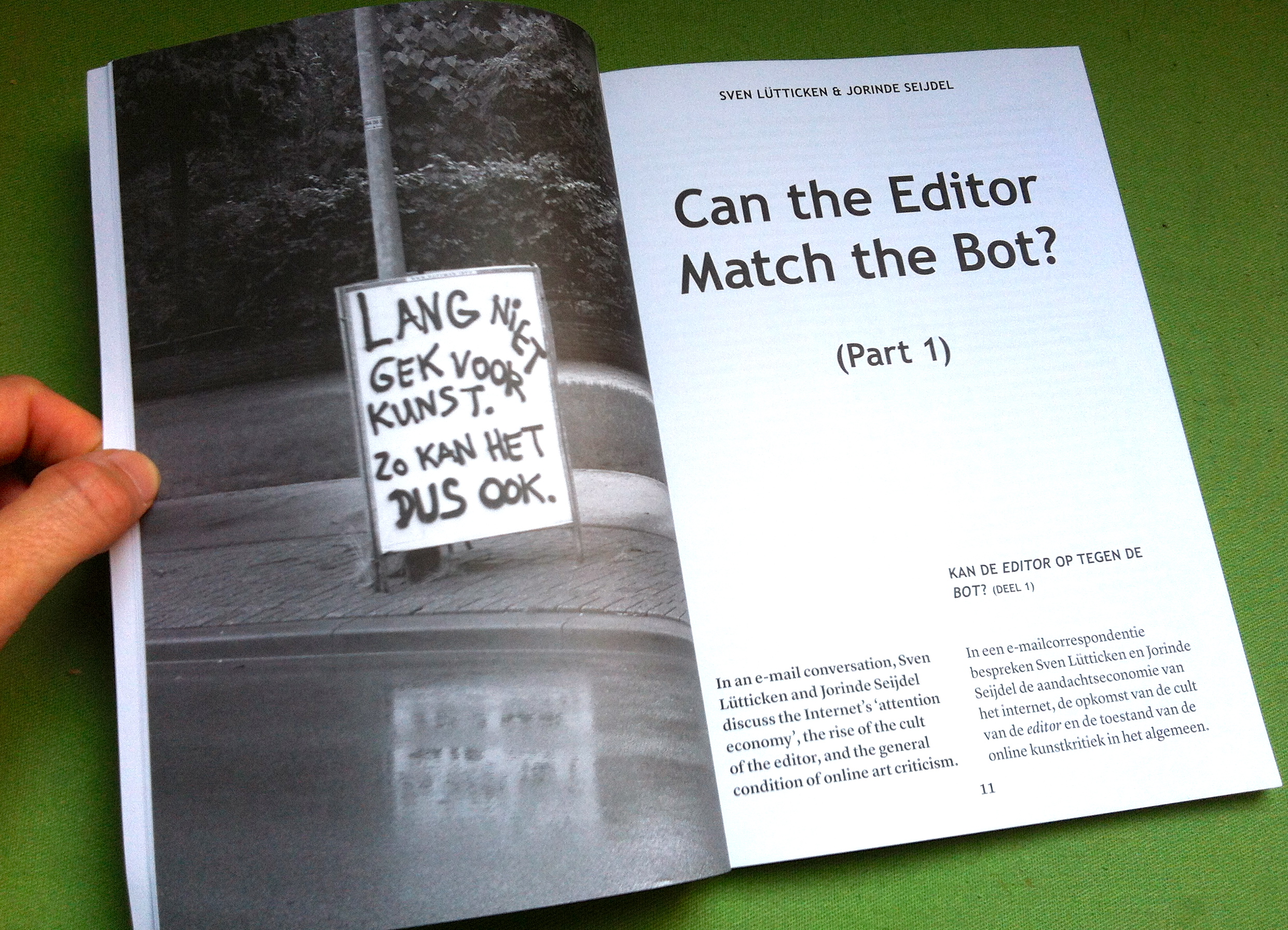
The new issue of Kunstlicht, the art-history journal affiliated with VU University Amsterdam, is titled “Art Criticism in the Networked Age.” One of the contributions is an e-mail conversation in two parts between Open! editor Jorinde Seijdel and myself, moderated by Steyn Bergs: “Can The Editor Match the Bot?”
 Sven Lütticken: Texts and Projects
You must be logged in to post a comment.