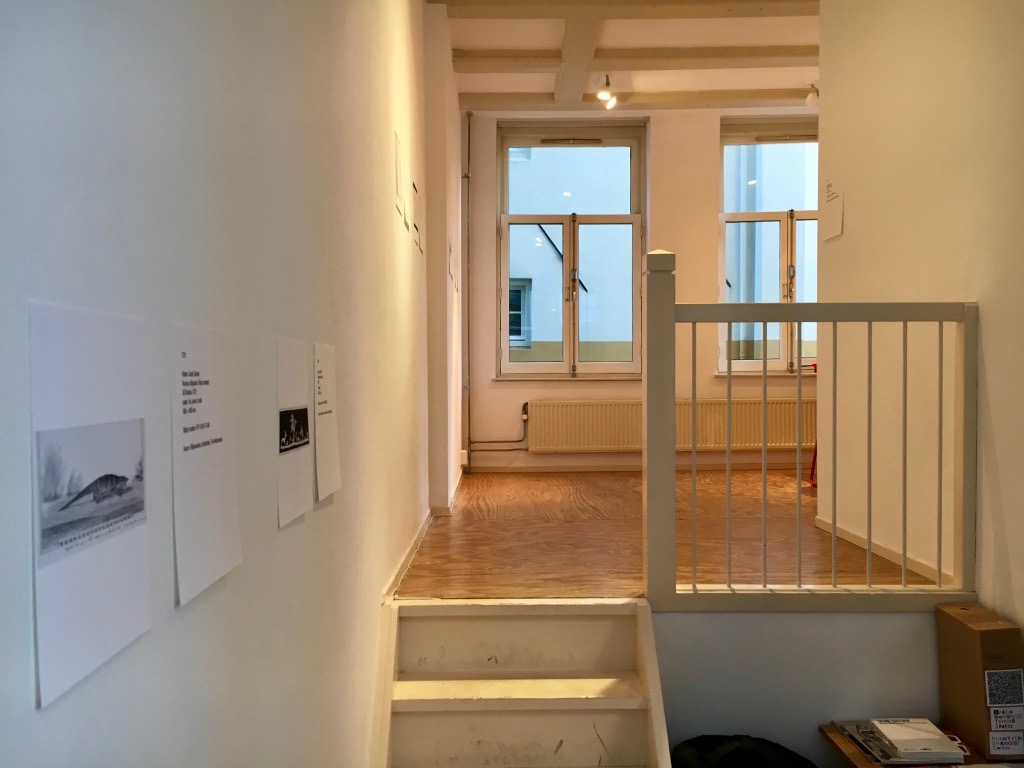
In late 2019, I curated a small exhibition at Rongwrong in Amsterdam, Sean Snyder’s The Rembrandt and Ravachol Appreciation Society. Since Covid hit during the show’s runtime, it got rather buried, and I don’t have the best and most complete documentation either. It is a project that is very much worth revisiting, and I finally managed to add it to the “Curatorial Projects” page of this site.
Two days ago, we lost Alexander Kluge at the age of 94. Even in his final years, his intellectual alacrity and curiosity were marvelous to witness. I wrote about his work on several occasions, including in Objections and States of Divergence, and I was lucky to have the occasional exchange with him. His enthusiasm for Objections meant a lot. At the moment, I find it difficult to synthesize my thoughts on Kluge’s achievements and importance—especially soon after the passing Habermas, a figure so emblematic of the blind spots and delusions of post-war and post-reunification German intellectual culture. I cannot bear to study the necrologies churned out by the German Feuilleton, of which Kluge was such a lodestar. Better to engage with this or that aspect of this endlessly generative body of work. Recently, I have again been drawn to Kluge and Negt’s Öffentlichkeit und Erfahrung, that crucial counterpoint to Habermas’s liberal conception of the public sphere.
One thing that sustained me through the dark winter of 2023-24 was writing about Kluge’s recent filmic experiments with generative AI for Sabine Folie’s exhibition History Tales. These short pieces are very much about potential history, though not exactly in the Azoulayan sense. Although there would be more to say about Kluge’s particular use of AI image generators, and while his conception of historical potentialities (roads not taken) certainly has its limits, what remains suggestive and productive is his insistence on reading, imagining and imaging history against the grain, being attentive to what is unfinished business. One great Klugean phrase from our conversations has burrowed its way into my brain. Speaking of wresting history from sovereigns and warlords, he exclaimed: “Wir könnten dann durchaus gut manövrieren, und zwar nicht auf Schlachtfeldern,” which one might translate as “Then we would be able to maneuver quite well—and I’m not talking about battlefields.”
I need to update the “article” and “books” sections of this site at some point, but for now here is a PDF of my essay.
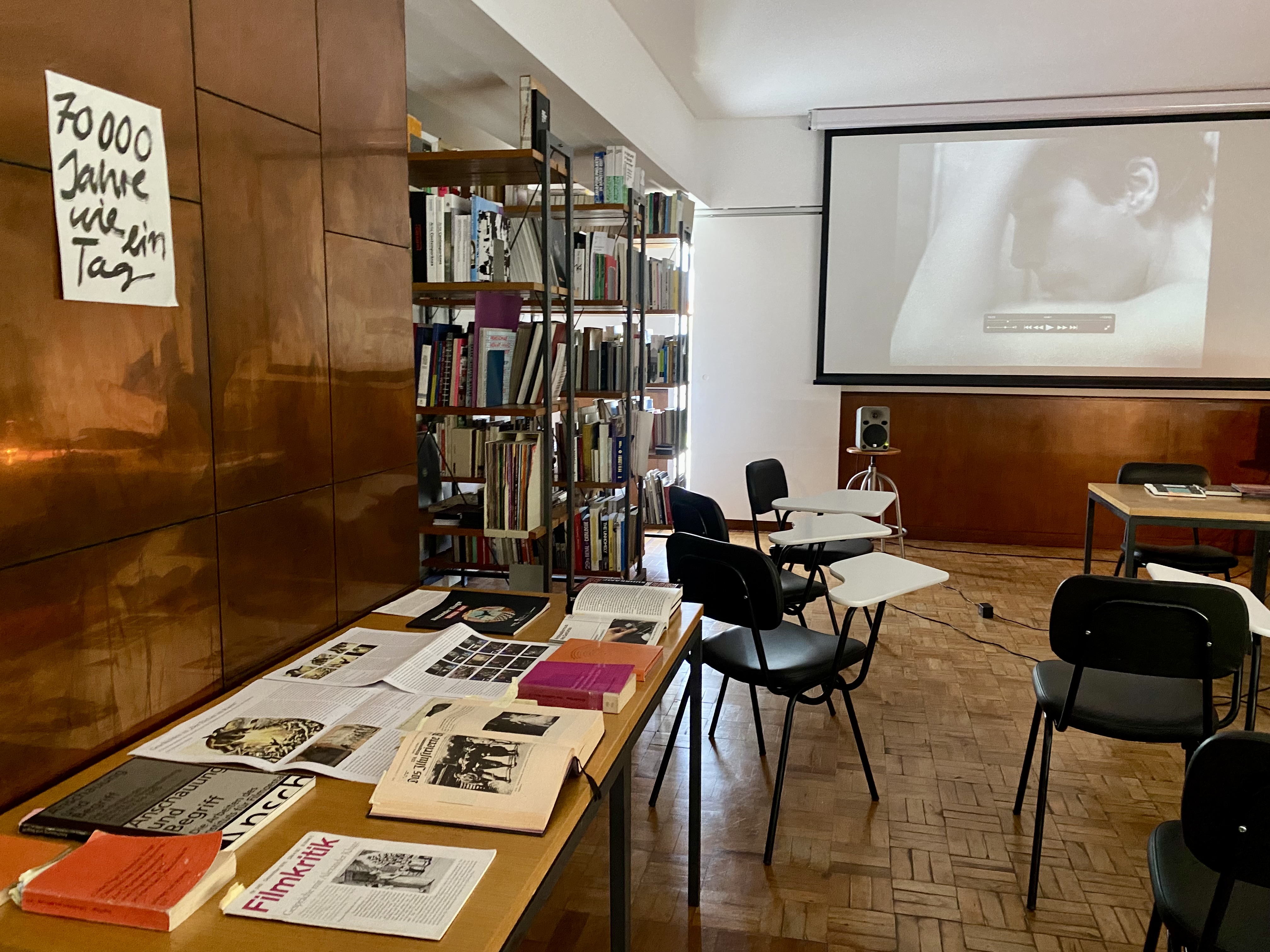
Image: my Kluge seminar at Maumaus, Lisbon, fall of 2023.
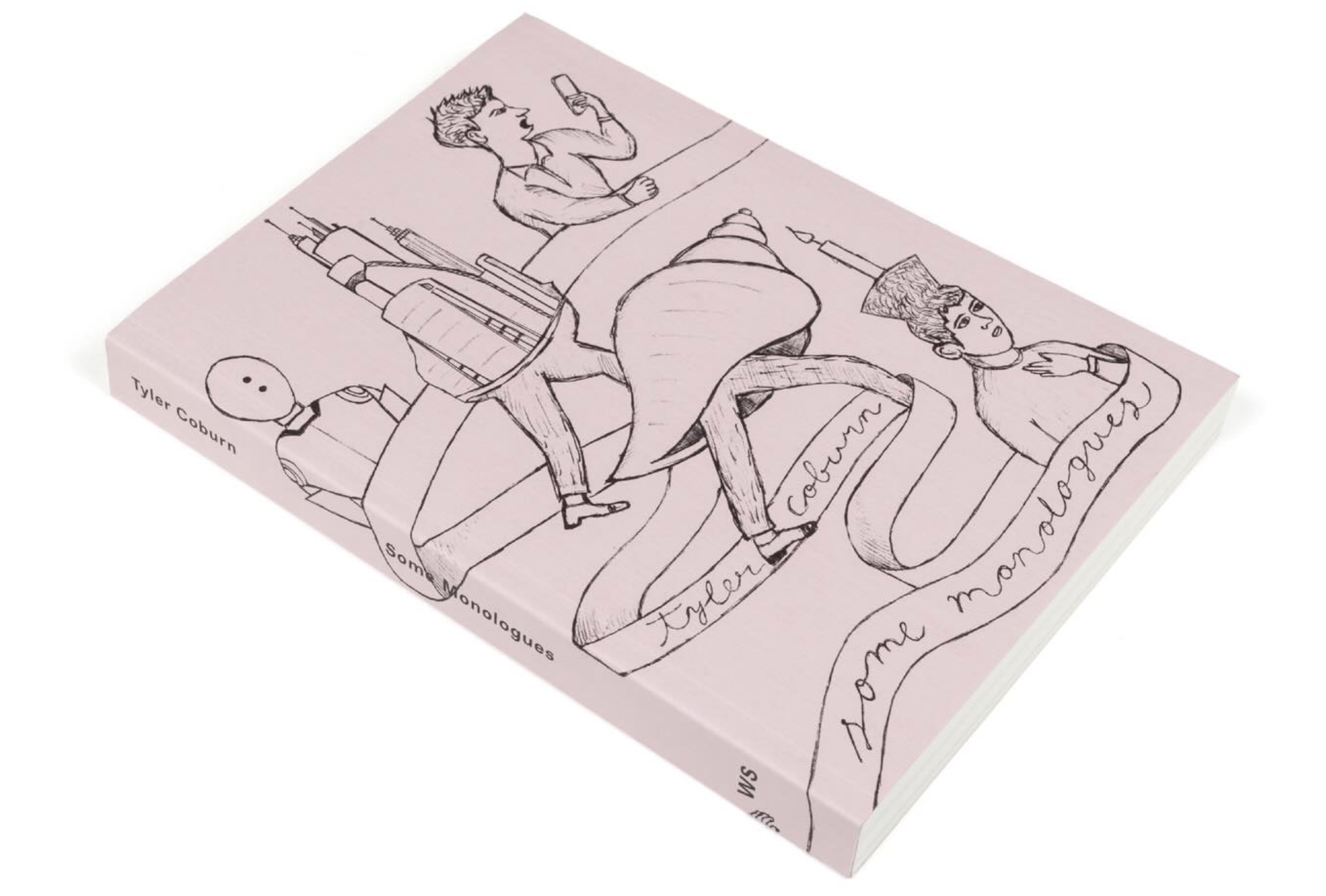
The amazing Wendy’s Subway in New York has announced the release of Tyler Coburn’s Some Monologues. In this volume, scripts by the artist are accompanied by short texts on the pieces in question. I contributed a text on the performance Richard Roe and on Tyler’s particular take on legal personhood. This is an exemplary publication—documenting, articulating and expanding upon the scripts. Much more than a traditional and generic monograph or catalogue could, Some Monologues presents, rather than represents, Tyler’s practice. This is primary information.
The latest installment of e-flux journal (no. 157, October 2025) contains my essay “Propositional Politics,” which looks into the politics and the poetics of various propositional practices in contemporary art. Other authors in this issue include a certain Walter Benjamin, with his essay on Max Kommerell’s book the German writer Jean Paul. I am happy to learn that Jean Paul is finally being translated into English; check out the Logbook of Giannozzo the Balloonist for starters.
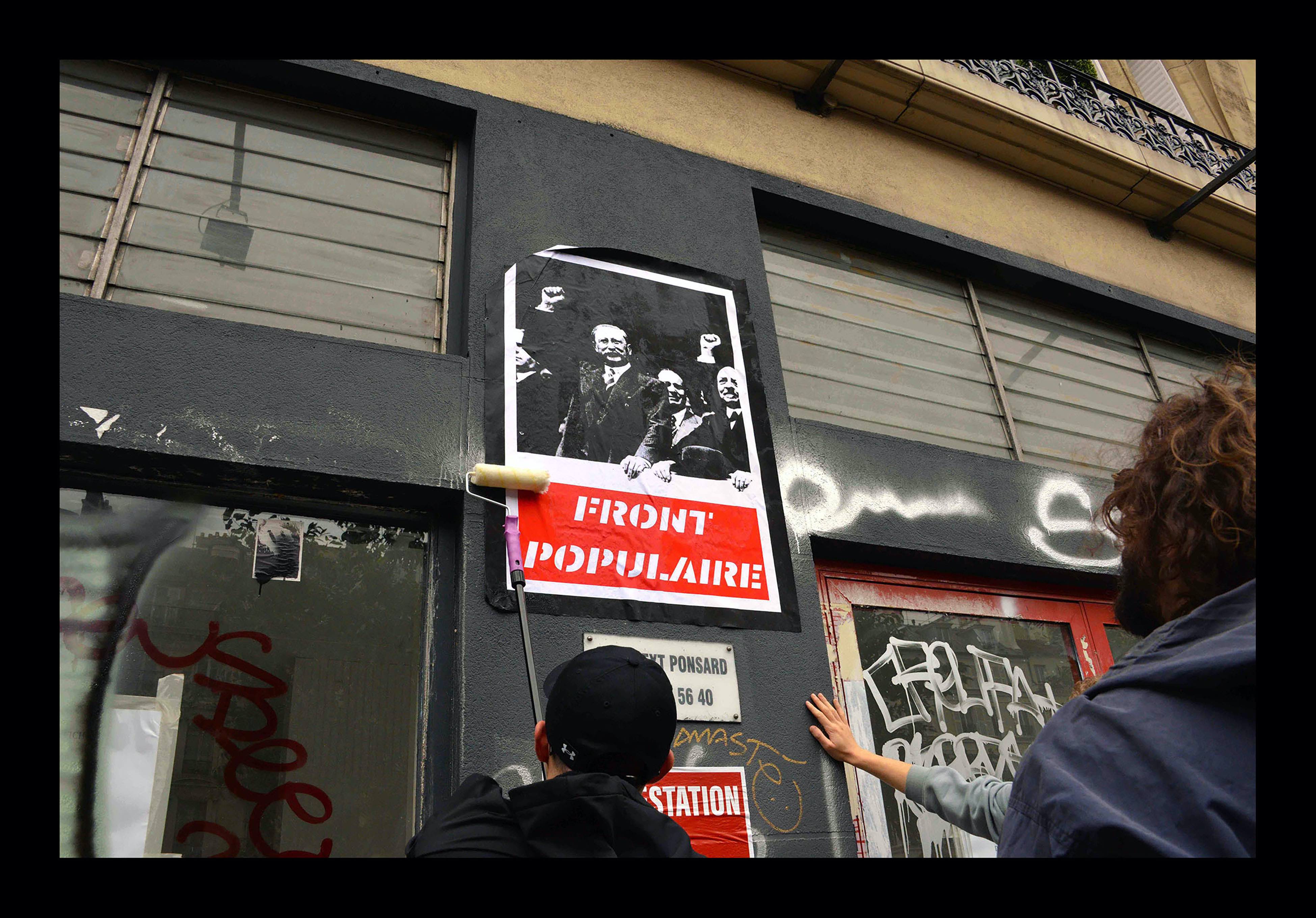
Image: Lidwien van de Ven, Paris, 15/06/2024 (Léon Blum). This work is not discussed in “Propositional Politics,” but was on my mind when writing the passage on the Nouveau Front Populaire.It should be considered part of the constellation of images accompanying the text, rather than the public domain photo of a 1930s rally.
The destruction of cultural infrastructure in the Low Countries continues with the Flemish government’s decision to downgrade the M HKA (the museum of contemporary art in Antwerp) as a museum, integrating its collections into the S.M.A.K. in Ghent, and turning the M HKA into some kind of art centre. The L’Internationale Confederation has issued a support statement, and the by now sadly familiar petition can be found here.
I’m thrilled and honoured to be the 2025-26 “Studies Constellation” fellow at the Museo Reina Sofia in Madrid. Few museums accord such a constitutive role to research and critical study, and I look forward to generative exchanges. In the context of my fellowship project “Unacting Personhood, Deforming Legal Abstraction,” I’m also working toward the second volume of Forms of Abstraction, which revolves around legal and organizational form. One component will be a seminar on personhood. This seminar is hybrid, i.e. participants don’t have to be in Madrid.
For Minor Compositions’ Firefly Frequencies podcast, Stevphen Shukaitis had a conversation with me about States of Divergence (or a conversation that uses the book as a springboard). It’s episode 32 and can be found here. I also just recorded an e-flux podcast with Andreas Petrossiants, but this will be released later, probably in early September, ahead of one or two book launches in Holland.
The new issue of the Austrian art magazine Springerin contains a conversation between Ana Teixeira Pinto and me titled “Surviving Fascist Solidarity.” The German translation is now online; I’ve been told that the original English text will follow at some point. Sadly, some of our analysis only seems to have become more pertinent at a moment when German chancellor Friedrich Merz has stated that Israel is doing the “dirty work” for the West by bombing Iran—a comment that, so far, has failed to trigger massive demonstrations and the kind of backlash that it deserves.
The image accompanying the text is a 1933 photo by Wally Elenbaas, a Rotterdam-based artist who around that time was a member of the Vereeniging van Arbeiders-Fotografen (Association of Worker-Photographers). The image shows the “Fascism Is Murder” slogan which Elenbaas and a group of comrades had painted on the Delftste Poort in Rotterdam. In an act of poetic injustice, the building would be destroyed in the Luftwaffe’s bombardment of the city in 1940.



 Sven Lütticken: Texts and Projects
You must be logged in to post a comment.