Grey Room no. 91: Plan and Council

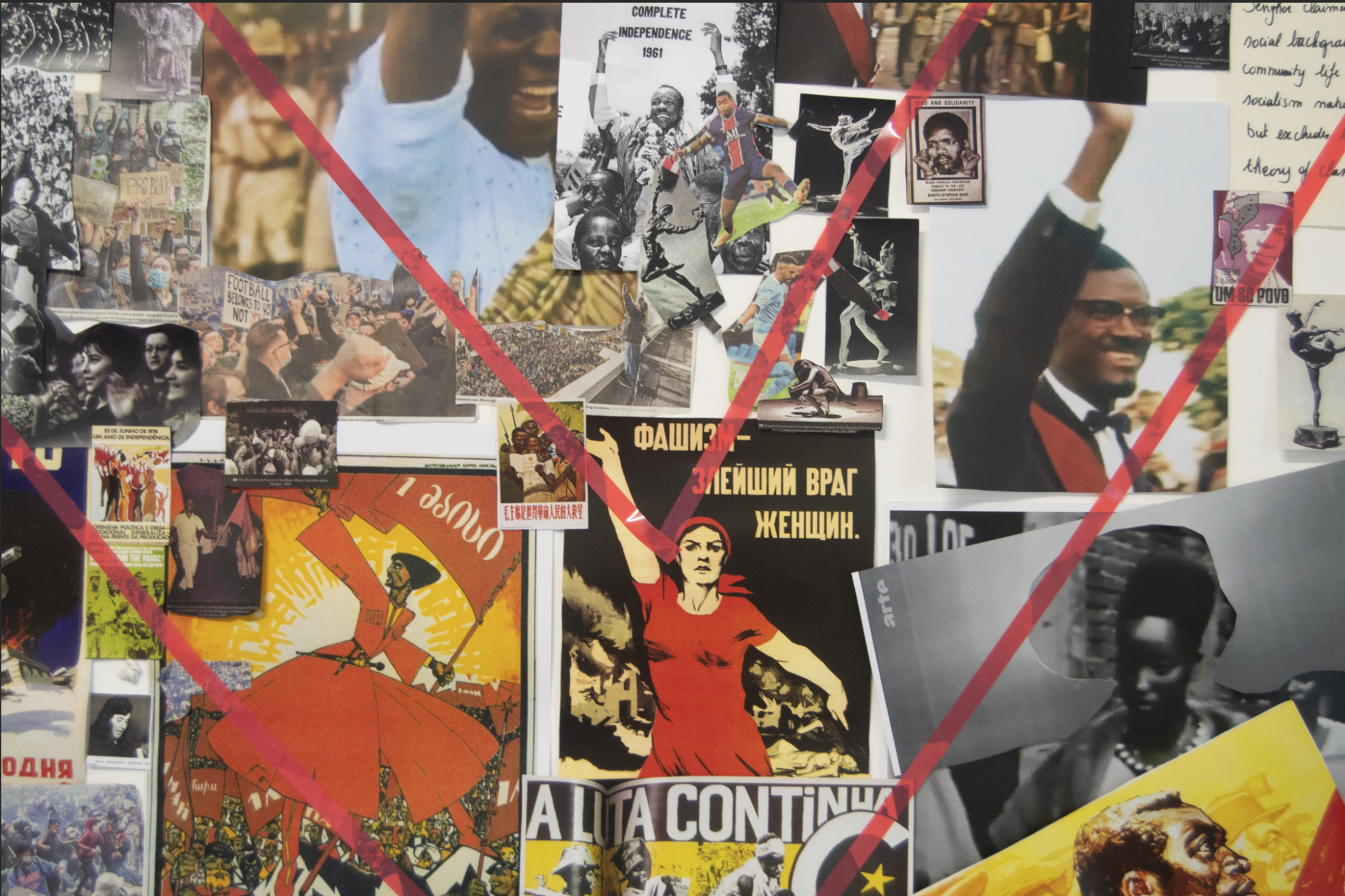
The new issue of Grey Room contains my article “Plan and Council: Genealogies of Calculation, Organization, and Transvalation.” Responding to the renewed discourse on socialist calculation and economic planning in the context of Big Data, this text revisits debates on plans and on workers’ councils, with particular focus on the role of aesthetics and visualization—from Gerd Arntz and Otto Neurath in the 1920s and 1930s to recent projects by artists such as Jonas Staal and Alice Creischer and Andreas Siekmann. If the texts appears to resonate somewhat with my recent October essay on organizational aesthetics, this is not entirely coincidental: the plan is that they become the basis for consecutive chapters in the second volume of Forms of Abstraction—at some point, if there is enough interest to warrant the effort.

Images: Gerd Arntz in Die proletarische Revolution (1927); Make Amazon Pay campaign designed by Jonas Staal.
Dora García

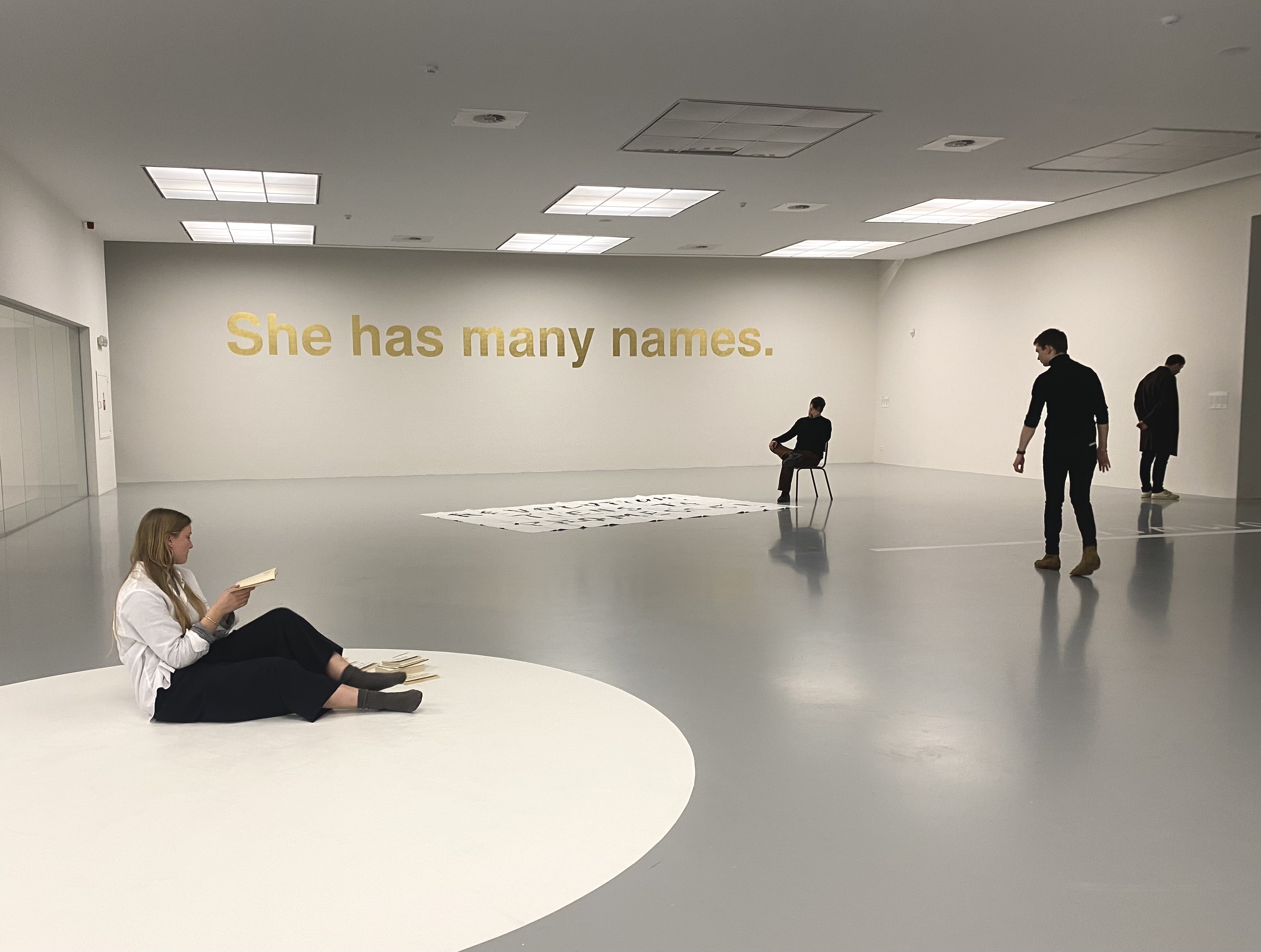
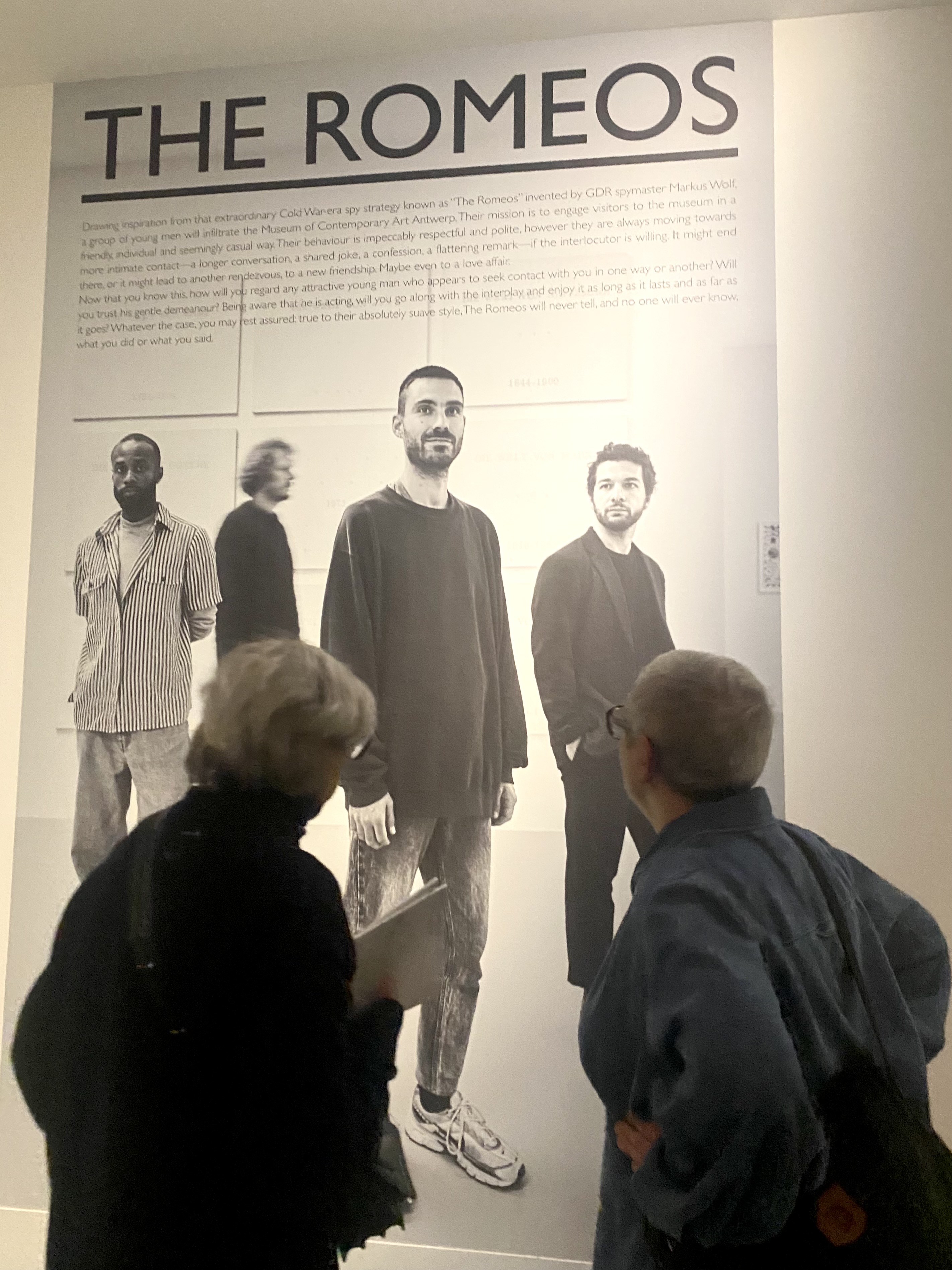
Dora García’s exhibition She Has Many Names is a on view at the M KHA in Antwerp till May 21. Unlike the artist’s Reina Sofia show in 2018, this is not exactly a survey—but it is a very substantial and cogent selection of works, with a focus on performance, drawing, and films. Every Wednesday to Sunday, various pieces are performed in conjunction with the exhibition, or as part of it. Some are easily recognizable as performances; others are surreptitiously woven into the exhibition’s temporal fabric of crisscrossing pathways.

I have contributed an essay titled “Enacting Red Relations: On Dora García and Performance” to the accompanying publication, Inserts in Real Time, which K. Verlag is about to send to print, and which will be available by May:

Inserts in Real Time is the first monograph on the performance work developed by artist Dora García over the past twenty years. The book contains a conversation between the artist and curator Joanna Zielińska; a selection of her performance scripts; her performances to date, listed, illustrated, described, and contextualized; and three newly commissioned texts—by art historian Sven Lütticken, performance theorist Bojana Cvejić, and Dora García.

All photos taken during the opening.

October no. 183: Organizational Aesthetics

Issue no. 183 of October contains my article “Organizational Aesthetics: On Certain Practices and Genealogies.” This text examines organizational forms in art since the 1990s. With this obviously a partial and partisan mapping, I hope to open a fruitful line of inquiry. The text is part of my ongoing Forms of Abstraction project, and will form the basis of a chapter in the second volume, Personafications—which, I hasten to add, will not be for tomorrow, or even for next year. These things take time.

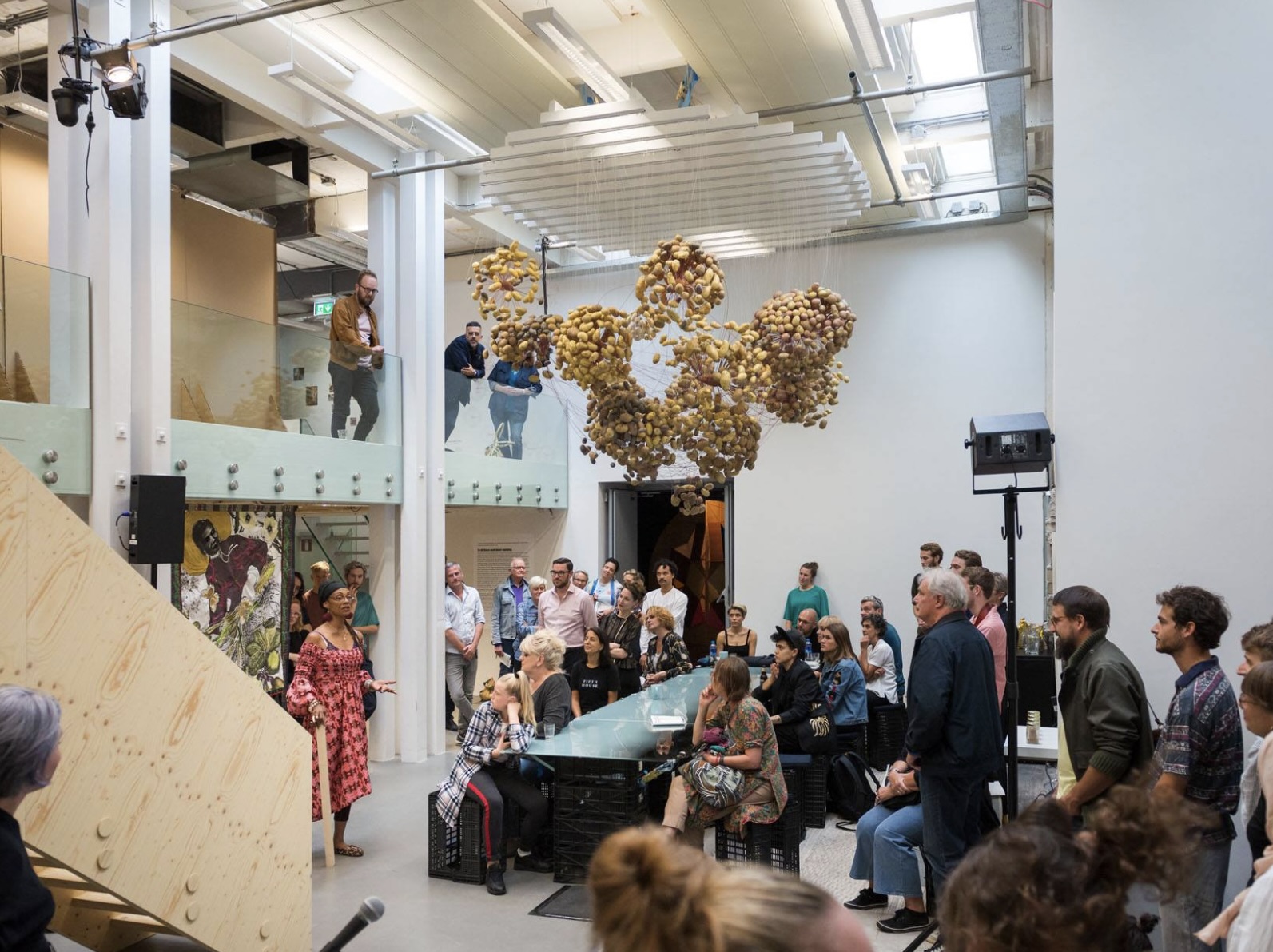
Image: opening of Jeanne van Heeswijk’s Trainings for the Not-Yet (2019).

Philipp Gufler

I contributed a short essay to a new limited-edition book by artist Philipp Gufler, A Shrine to Aphrodite, which focuses on his mirror paintings and associated performances and films dealing with reflection and narcissism. From the text: “Gufler’s ‘mirrorical’ art passes through the looking glass; his spaces are traps for the gaze. The reflective surfaces and diaphanous scrims in his oeuvre function as projection screens and as obstacles in games of identification and disidentification; recognition and misrecognition; self-performance and self-alienation.“

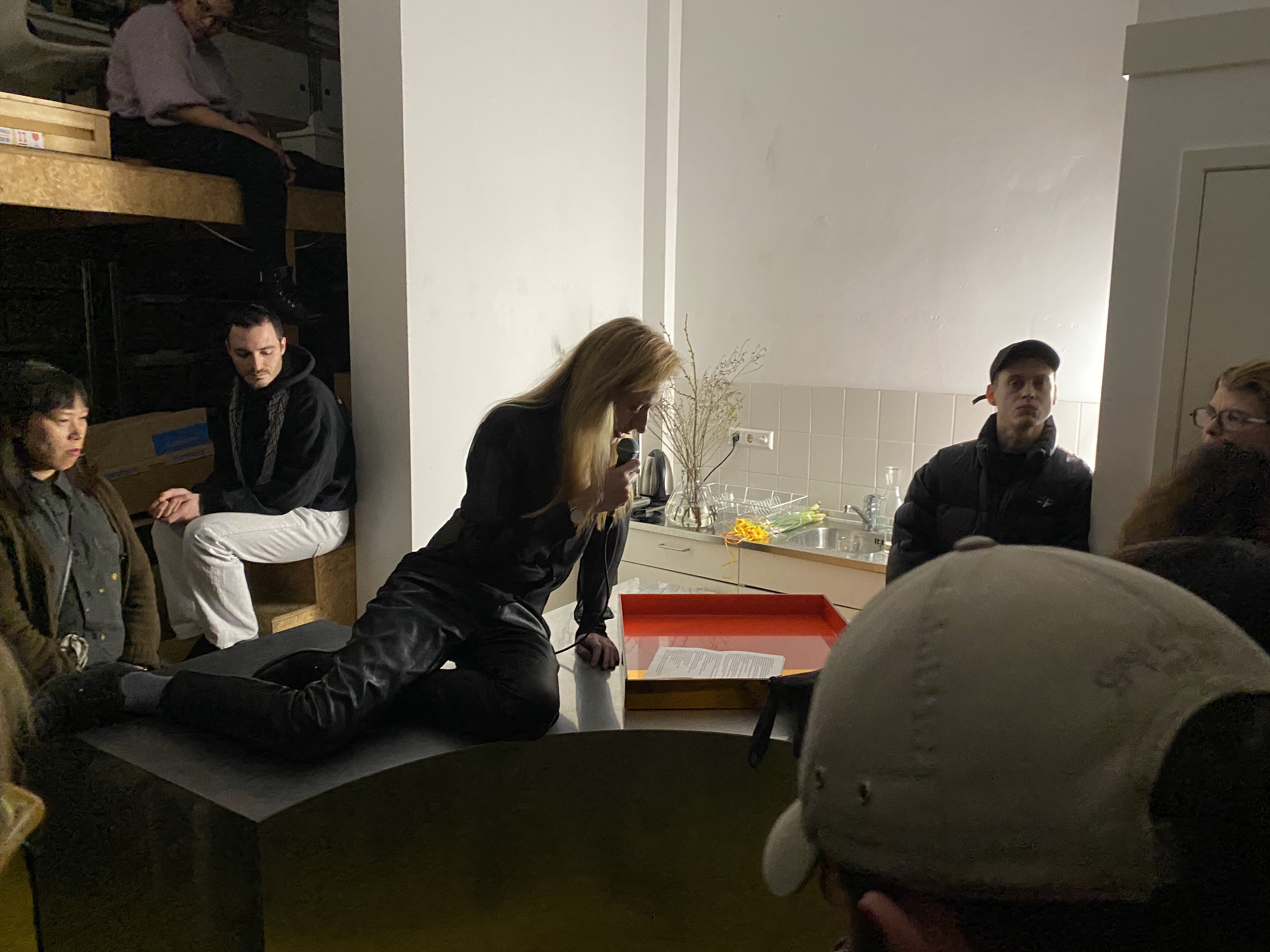
Images: book launch at San Serriffe in Amsterdam,

Reenactment Again, Again

There’s yet another reenactment volume out, On Reenactment: Concept, Methodologies, Tools, edited by Cristina Baldacci and Susanne Franco. This time I’ve been roped in via the format of a “duet”—i.e., an interesting and enjoyable conversation—with Susanne. The publication is open access; the conversation can be found here, and the entire table of contents here.

Image: Pauline Boudry and Renate Lorenz, (No) Time, 2020.

Materialization

Objections, which I’ve known for such a long time as a potential book in the form of various types of files, has been actualized and materialized. While I’m obviously already finding little mistakes that are entirely my own fault, thanks to graphic designer Rogier Delfos I couldn’t be more pleased with the result. I abhor the design fetishism that plagues the Dutch cultural field, but this is a wonderful example of graphic design as a practice of visual and material articulation, rather than as either generic or showy packaging.

The book’s page on the Sternberg Press website: here. MIT Press (the US distributor): here. MIT Press mentions “March 2023” as the publication date, but I’m assuming/hoping that it will not take that long for the American distribution to start… According to the Sternberg page, shipping will start on November 3.

Autonomy and Abstraction in Print, Finally

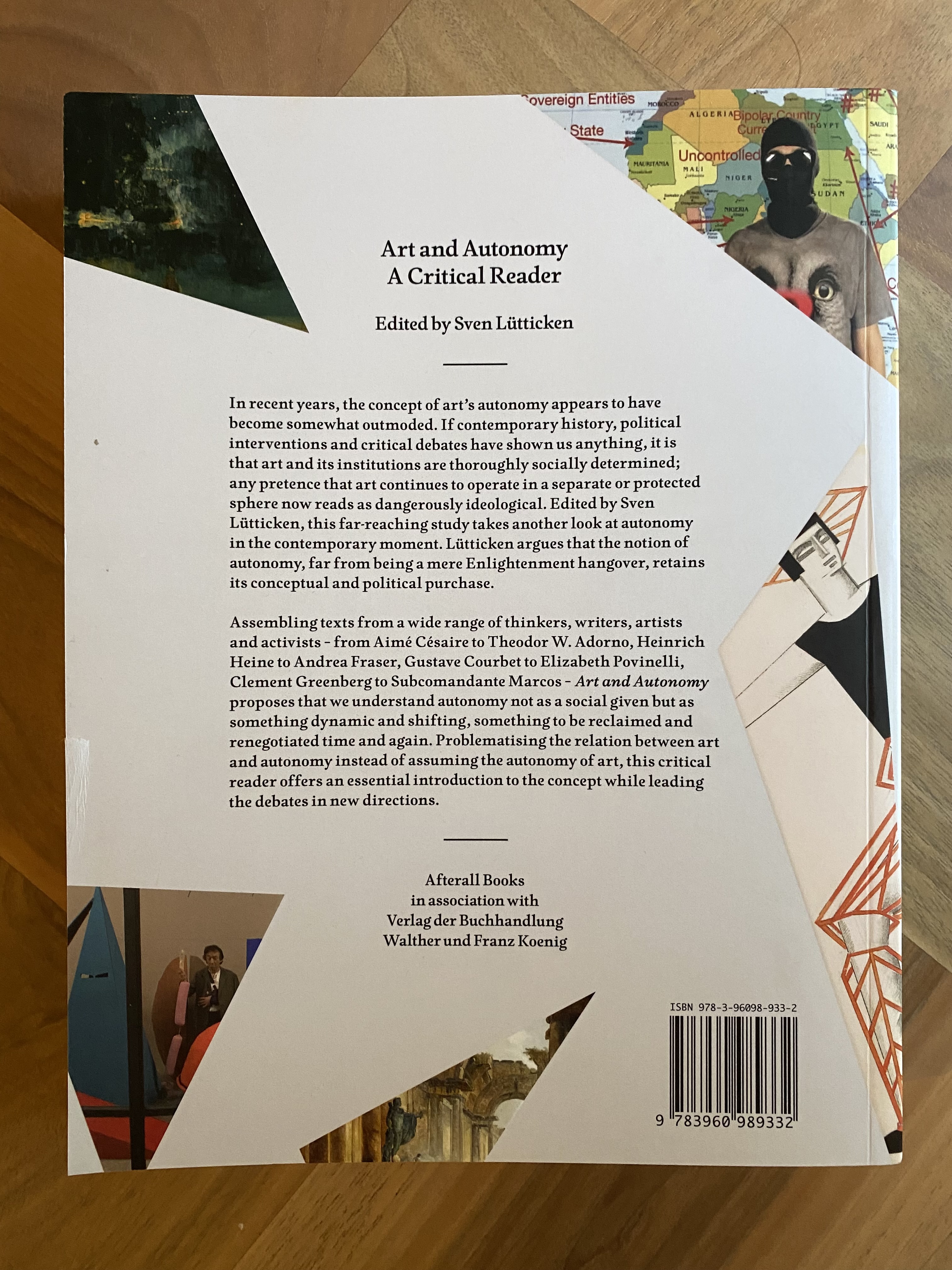
Speaking of delays: in an age of social media and hot takes, the printed book is a deliriously slow medium. I don’t think I’ve ever been involved with publishing projects so seemingly endless as the forthcoming (no, really!) Art and Autonomy reader and Objections, the first volume of my Forms of Abstraction project. Both Art and Autonomy and Objections have been printed, and should be making their way to a bookseller near you right about now. They’re both affordably priced, so you have no excuse.

It was thanks to the tireless editorial efforts of Louis Hartnoll, and backing from departing Afterall honcho Charles Esche, that the reader became a reality after all. At Sternberg, it was Zoë Harris who really took charge of the editorial side. Both Louis and Zoë have the kind of patient precision that are indispensable in these kinds of project, and they go many an extra mile while knowing that their names won’t be on the cover—even though they deserve to be, as far as I’m concerned! For Objections, I was lucky enough to have Rogier Delfos take care of the design, and it looks as though I will finally be content with the visual and material realization of one of my books.

Given that the manuscript of Art and Autonomy was submitted in 2014, and the concept for Objections (drawing in part on older work) began to congeal not long after, I’m rather curious if and how these books will register in our ever-new normal. This may be an anachronistic quality of this medium: too slow to be up to date, the book can potentially become a theoretical intervention in the prison of the present.

Documenta Delay

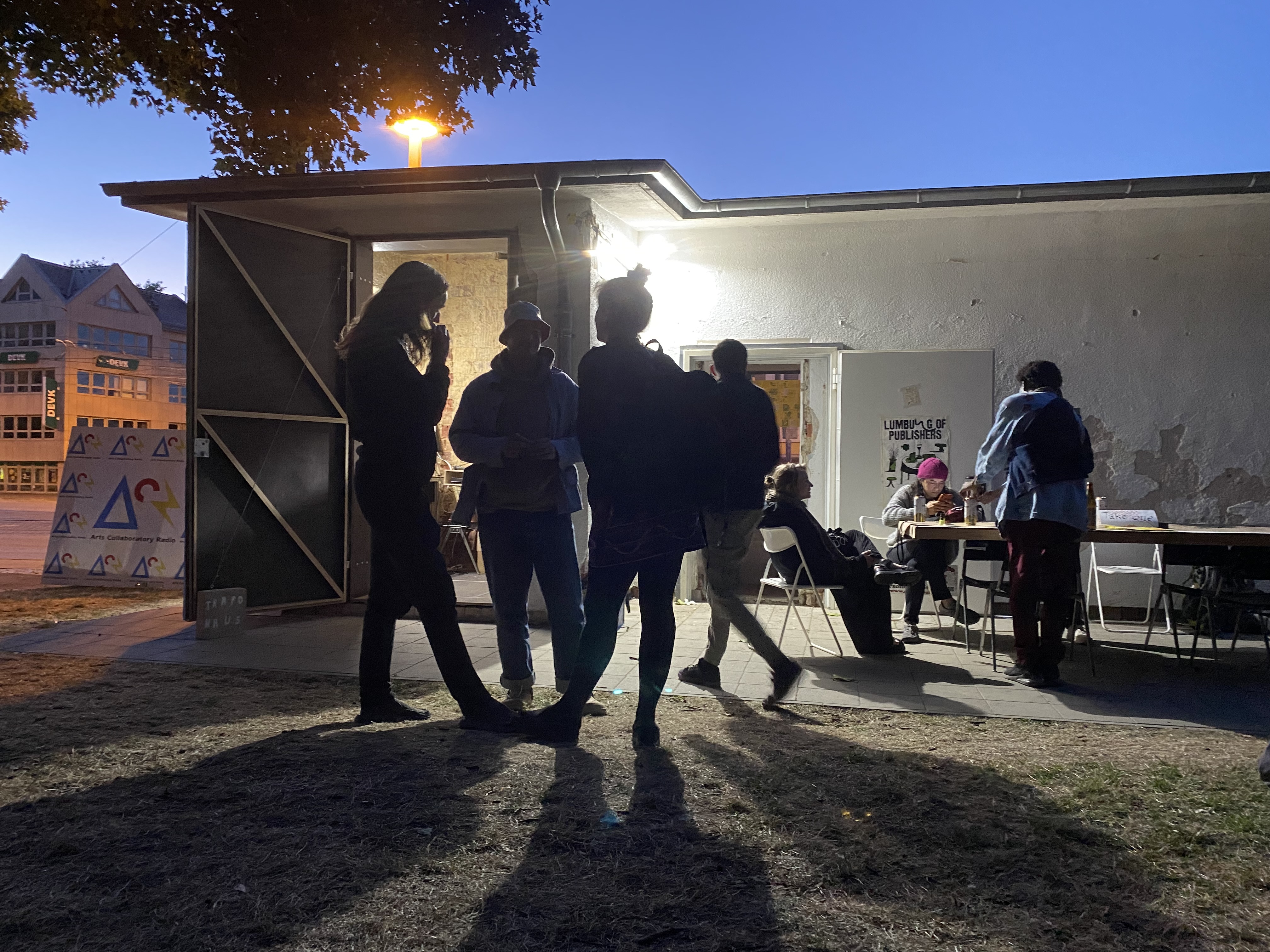
I’m getting questions whether I will review documenta. Frankly, at the moment I don’t know which medium would be a hospitable and productive context for such a review, but this summer I’ve been finalizing a long-gestating article on “Organizational Aesthetics,” updating its last section with thoughts on documenta fifteen. Since it will be published in a venerable academic journal, and since academic journals are at the other end of the spectrum of speed, this text will see the light of day sometime next year. In a culture of accelerating instant (and insta) comments and opinions, there’s something to be said for being out of sync and slowing downthough ideally not quite as much as in the case of those two books of mine that are finally about to be released. One of those albatrosses I’ve dragged around for ten years…

Image: nonkrong at documenta fifteen with members of Arts Collaboratory/ Cooperativa Cráter Invertido